Stay up to date
Get regular updates about stadium news, upcoming events, and exciting announcements.
Oops! Something went wrong while submitting the form.

PORTABLE WICKETS
INITIAL CONSTRUCTION OF THE TURF IN 1999
ARTIFICIAL ROAD
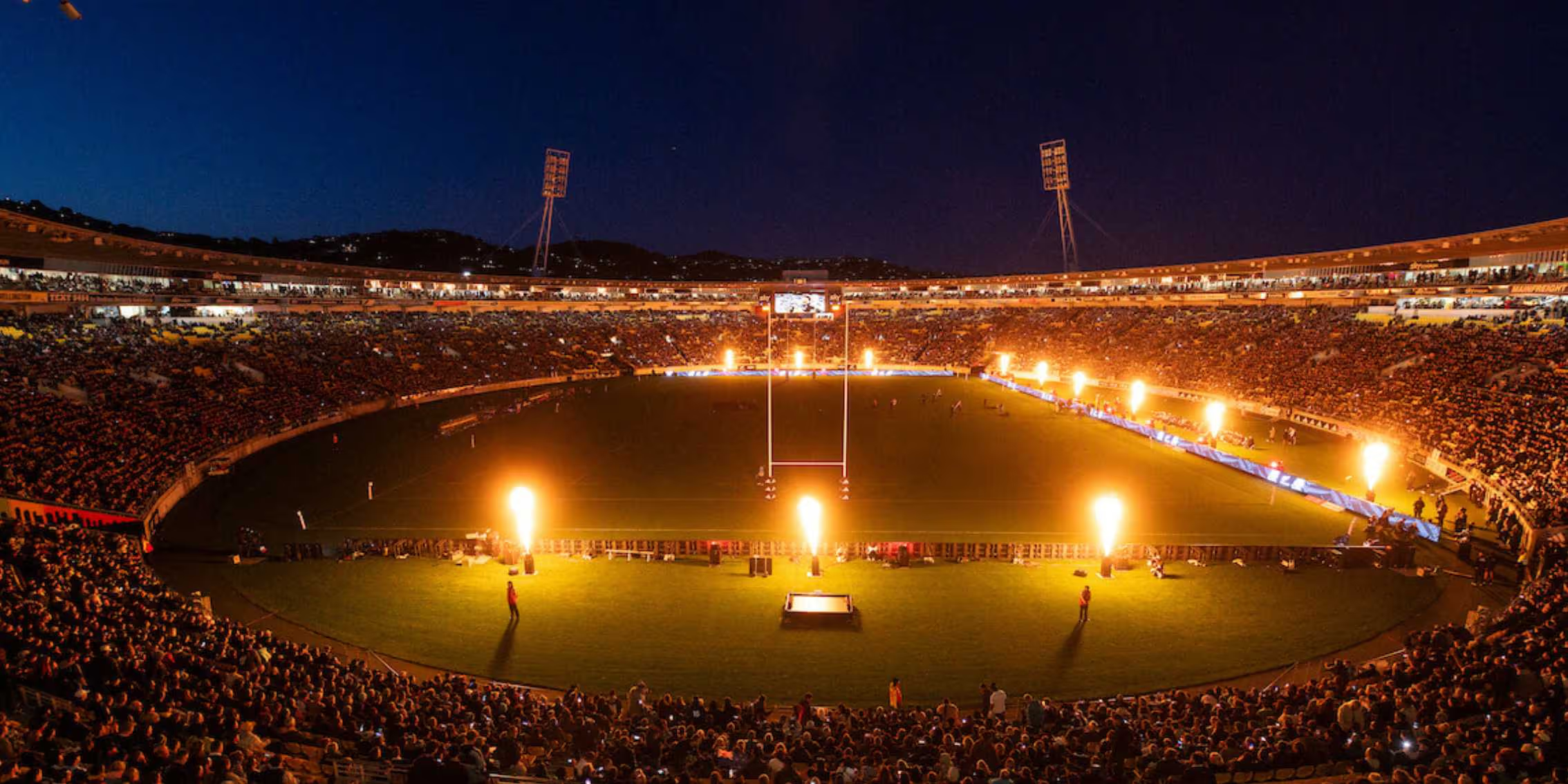
Total number of seats: 34,500
Number of public seats (non-members, non-boxes): 31,000
Number of covered seats: 24,000
Number of corporate boxes: 62
Bowl site size: 48,000 sqm
Number of piles: 410
Roof size: 12,000 sqm
Height from arena to roof: 26 metres
Height of light tower: 55 metres
Length from end to end: 235 metres
Width west to east: 185 metres
Width of pitch (widest point): 135 metres
Length of pitch (widest point): 162 metres
Number of turnstiles: 43
Number of escalators: 3
Number of goods lifts: 2
Number of toilet pans: 383
Number of urinals: 275
Number of television sets: 270
Food and beverage outlets: 15
Mobile beverage outlets: 9
Northern replay screen: 84 sqm
Southern replay screen: 52 sqm
Length of the concourse: 650 metres
Width of the concourse: 14 metres
Length of walkway to rail station: 680 metres
Emergency Evacuation time: 8 minutes
Carparks on site: 850
Staff numbers on event days: 400-1000
Staff numbers on non-event days: 25-50
Height of the goal posts: 15 metres
The four lighting towers use the Signify (Philips) ArenaVision LED floodlighting fittings. These are designed exclusively for sports and multi-purpose venues, and were commissioned in June 2023 ahead of the FIFA Women's World Cup 2023.
There are 53 LED fittings per tower (212 total), plus the rim lights which are set up in four zones with 48 per quarter (192 in total) giving a grand total of 404 LED floodlight fittings all up.
These replaced the 392, 2000 watt globes in the light towers from the original build.
Design Managers and Main Contractors: Fletcher Construction Ltd
Architects: Architecture Warren & Mahoney Ltd, Bligh Lobb Sports Architecture
Project Managers: Beca Carter Hollings & Ferner Ltd
The Wellington Regional Stadium Trust would like to acknowledge and thank the following for their vital funding support which helped make the Stadium a reality:
Te Uruhau, the main entrance design, was created by Te Oranga Whareaitu on behalf of the Wellington Tenths Trust. The Wellington Tenths Trust represents the descendants of Taranaki whānui who were owners of Wellington and the Hutt Valley in 1840.
1. Rua Taranaki (The Mountain)
2. Te Raukura (The Feathers)
3. Manaia (Stylised Carved Figures)
4. Ka Awatea (The Spirits)
5. Kowhaiwhai (Façade)
1991
Wellington Rugby prepares plans to redevelop Athletic Park
1993
WCC and sports codes begin planning multi‐purpose stadium on Basin Reserve.
Porirua supporters promote Aotea as stadium site.
1994
February 1994. Government agrees to make railyard site available and planning focus moves there. Petition to support the railyards is circulated.
June 1994. Feasibility study says 41,000 seat stadium will cost $70m.
August 1994. Sir Wilson Whineray assesses regional options and opts for railyard as best site ahead of Porirua (Aotea) and Lower Hutt (Fraser Park).
1995
July 1995. Wellington City Council agrees to $15m loan as base funding.
August 1995. Wellington Regional Council poll shows 75% support across region for ratepayer funding. Council gives conditional approval for $25m loan.
December 1995. Naming rights sold to Westpac, corporate box sales commence. New Zealand Lottery Grants Board awards $4 million grant
1996
February 1996. Community Trust of Wellington awards $3 million grant
July 1996. First resource consent application fails in face of residents’ opposition. Planning begins on more expensive model to accommodate design change requirements.
November 1996. New plans unveiled.
1997
March 1997. New proposal gets resource consent.
August 1997. Fletcher Construction wins contract.
October 1997. Membership sales commence (2500 to sell to raise $30m capital).
1998
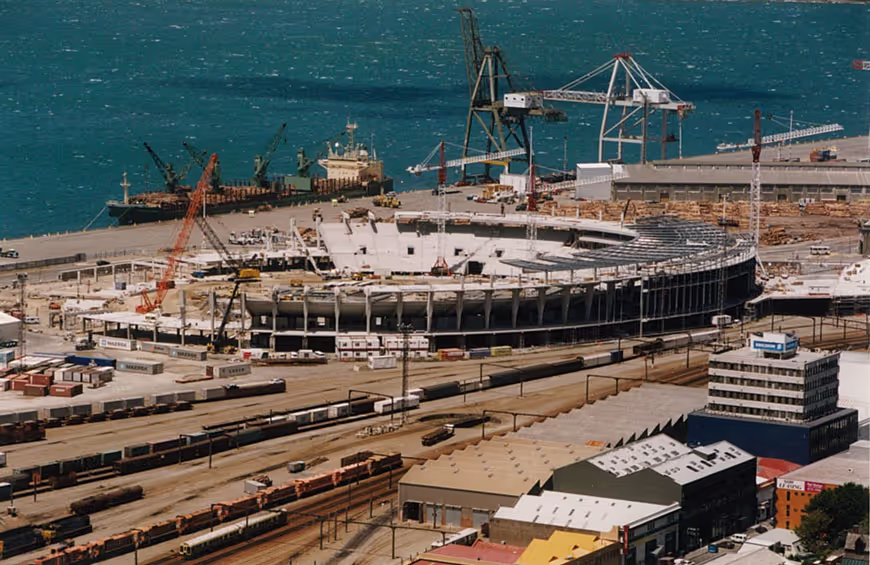
12 March 1998. Tapu lifted on ground – construction commences.
June 1998. The first long raker beam to support seating units was lifted into place. The following month the first concrete seating unit was placed.
November 1998. Fletchers lifted the first roof section into place, and wall cladding started in December.
October 1998. First roof segment in place.
1999
April 1999. Cricket block was laid. Circle of concrete seating sections was closed.
May 1999. Cricket pitch mowed for first time.
June 1999. Roof completed.
Staff recruited – trained at Te Ati Kimihia.
Work started on laying outfield.
November 1999. Stadium Trust offices opened and occupied.
17 December 1999. Stadium given Code of Compliance certificate by Wellington City Council.
Project completed and handed over to Stadium Trust after 21 months of construction, two weeks ahead of schedule. Project is within budget.
2000
3 January 2000. Official opening by Governor General.
2013
April 2013. Official re‐opening of the Members Clubroom by Jonah Lomu.
2014
April 2014. The East Mezzanine Bar was officially opened by the Rt. Hon. John Key, Prime Minister of New Zealand. This new addition boasts spectacular views over the Wellington Harbour.
2016
December 2016. The Turf Renovation Project began 5 December taking 16 days to complete and covering 15050 square metres (m2). Each turf roll measured 1m x 13m in length and 1204 rolls were used. The artificial ring road totaled 1343m2.